-
Time Off

Taking a vacation to regroup this week. Will write next week on a perennial pitfall for writers: professional jealousy. Stay tuned!
-
Watch Out!
I already addressed in a couple of posts about how writers can get victimized monetarily by publishing companies that charge fees for any number of services they offer their authors–and my one exception to paying presses was the fee that presses may ask for when they run contests for manuscripts once or twice a year.
But new reporting has come out that some presses are charging ALL submitters with fees, and that these certain publishers are owned by known bad actors in the indie publishing world. Read the full article here:
I’m transparent enough to admit that I sent Hurricane Baby to two of these publishers. I’m out about $50 to people who may not have even been interested in publishing anyone, much less me. One publisher on this list I withdrew from very early in my querying process after reading a Writers Beware post from Victoria Strauss, an invaluable member of the literary community who researches and collates publishing scams and the scammers that run them.
The other I withdrew my book from after reading this article.
Fool me once, shame on you. Fool me twice, shame on me. I looked at reputable organizations to find these publishers–various literary magazines maintain databases of small presses. and these trusted publications never had anything indicating that these presses were in any way suspicious. We’re on our own, folks.
Just goes to show that some people will do anything to make a buck. And others will be silent about these bad actors and are therefore complicit in their schemes.
The takeaway? Research, research, research. Make sure you know something about who you are sending your work to. Check them in Google. Scan for their names on Twitter and other social media. Give their website a detailed look–one way I weed out publishers is if I have never heard of any of their authors. If a place gives you bad vibes for any reason, don’t submit there.
The only way we can choke out these people is to decline to be a part of their income stream in order to make our point–that it’s wrong to take advantage of people.
-
Confession Time

I am not keeping up with some of my resolutions.
I am not reading very much, and I’m not working on my fiction project, either.
I have just been so tired when I finish work, so I want to do something mindless after work instead of concentrating on reading and writing. I think some of it is a lack of motivation due to the bad weather we’ve had. The forecast is promising to get warmer and warmer as we go throughout February though, so I am looking forward to an improvement on that front.
I think some of the lack of motivation of particularly writing on my fiction project is that I’m still getting rejections on Hurricane Baby with pretty consistent regularity. I went back and checked on a lot of my submissions from September, and many of those are rejections (I think) because I never heard any response back. Many of them say no response after three months is a negative response. :(. So.
That makes 20 rejections thus far.
I’ve not given up hope on Hurricane Baby–I have yet another email ready to go out on February 15 to yet another press. I still have 14 total I plan to send to. But a lack of response to it has dampened my enthusiasm to work on another manuscript.
But (and this is a mindset I am learning to embrace) the sunset of tomorrow is not the end of the world–it’s barely the beginning.
What do I mean by that?
My youngest daughter leaves home for college in August of this year. I have resolved to wait until then to get back into the fiction writing. She will have moved on to her new life at college, and I will have more time during the week to devote to writing, what with the end of going to her school activities and such. And I may need to immerse myself into something new to take my focus off of missing her.
I do plan to continue the blog with updates on Hurricane Baby (especially the play coming up this spring!) and my querying journey. I also plan to write a few craft essays to post here as well. So I’m going to still be writing here, on my other blog projects, etc. I’ve been at this too long to give up altogether.
But the time just may not be right at this particular second. That’s okay. Later is fine. Totally fine. I will keep reading, living, experiencing. That can only enrich my fiction–when the time is right for me to take it back up.
I hope you can stick with me on the journey. Thanks to all who read and write and encourage us writers in our dreams.
-
Playing with ChatGPT
So I decided to be one with the cool kids and see how well ChatGPT worked. I had it do several blog posts “in the style of Julie Liddell Whitehead”.
I was not expecting much, and that’s what I got.
It produces clean copy. But it’s very airy copy. No substance, all glitz. i asked it to write a blog post “about the book Hurricane Baby”. It gave it a glowing review that–oddly enough–sounded a lot like reviews handed out for books on Amazon. No specifics, no details, just airy copy how what a wonderful book it was! (I also got a lot of discussion about all the places that had interviewed me about the book and all the accolades it had won) Pretty good for a book that hasn’t been published yet. 🙂
Apparently it’s been trained to sound authoritative by using a lot of words. I tried getting paragraphs in the style of some other authors (like John Grisham and Anne Lamott) and got much the same results. It would not be hard to imagine it being written by a real person, as long as that person’s last writing class had been Business Communication in college. As far as imitating other authors, it didn’t have much of a range beyond a few big names.
I think what will always distinguish great writing from just good writing is specificity: details. quirky characters who sound like actual people, a sense of place. If you want boilerplate language, I think ChatGPT may can deliver that error-free. But the sense that an actual person is behind the writing? That’s up to us, the writers, to keep our writing fresh and exciting–and real.
-
Writing Is Hard

Not to sound all fuddy-duddy and get-off-my-lawn-ish, but I don’t think some people understand how hard writing is.
You have to do so many things well to write well.
You have to be able to research your topic. You have to know how to research your topic. You have to be committed to researching your topic, despite all the challenges that may be thrown at you. You can research by reading books, talking to people knowledgeable about the topic, doing internet searches, poring over primary sources and records. And each research method has its own skill set to master before it can be effective.
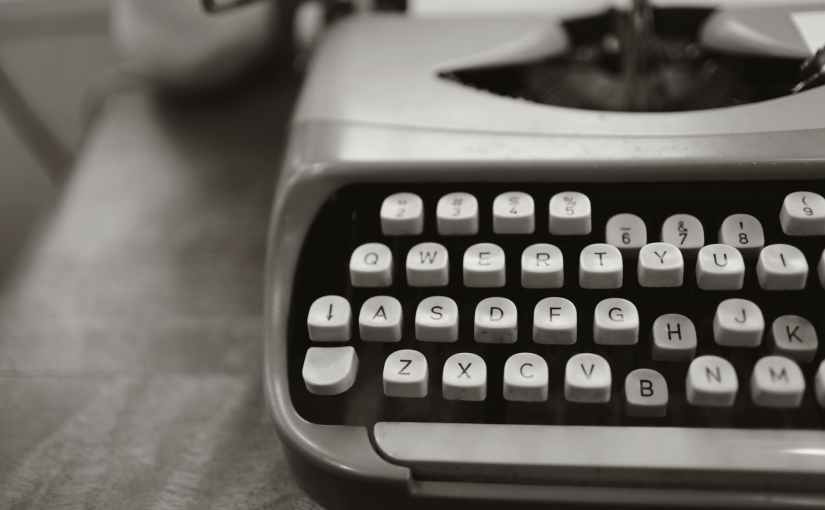
Gone are the days of the copy pencil and paper and two-finger typing on a manual typewriter. Soon the qwerty keyboard may be on its way out the door as well. Adapting to the speeded-up pace of publishing is a must. Adapting to technology is a must. Adapting to your physical environment is a must, whether you work in a dedicated space in your home, or a coffeeshop, or a busy office environment. Writing is a physical act, not for the fainthearted.
You have to be able to recall, synthesize, and highlight information that is important to the reader’s understanding. A plain recitation of the facts is NOT writing. Beguiling, seducing, and entertaining the reader is what writing is all about. Sometimes it feels like you have to trick your reader into understanding what you want to get across; other times you have to trick yourself into believing that anyone cares. The writer’s job is to make them care, even if they aren’t interested.
It’s lonely–writing as a group activity is almost never good writing. It’s isolating–often the writer needs time and space to just think about the work, rather than talking about it to someone or bombarding their consciousness with noise. It’s often excruciating–when the perfect word or turn of phrase is just out of reach of the writer’s mind. It’s alienating–the writer has to believe in themselves when others wonder when the writer is going to give up this obsession and get a job.
But if you show up and do the work, magic can happen. That’s the writer’s payoff–not money, not fame, not bestseller status. The magic of a craft practiced well is the best payoff there is.
-
Read-Thru
So I didn’t post last night, because I was doing something kind of nerve-wracking.
I sat down and read Hurricane Baby again, all the way through, from start to finish.
It was so gratifying. because the stories held up to scrutiny.
I had wondered if when I read it again, I would discover lots of problems. Continuity problems, poor story construction, tone-deaf dialogue–I was prepared for the worst: that I would see that it really wasn’t in my best interest to publish it.
That’s not what I saw reading it.
Are there places that could be better? Probably. One place in particular I thought I might need to add a scene that is referenced early on but not played out.
Typos? Yep. But not nearly as many as I was afraid of.
But the stories still felt true. I’m sure if someone picks it up, it will need to undergo some revisions. But the stories are there: meaningful, impactful, and oh so human.
That was a good feeling. I wish i could bottle it for when I find myself doubting my skills and talent. Hurricane Baby might not be Great Literature, with capital G and capital L.
But it’s good. And right know, that knowledge is enough.
-
Update on Numbers
So I decided to look at numbers again for Hurricane Baby’s querying journey–here we go.
Queries submitted: 38
Rejections received: 15
Places still on the list to send to: 10
I did get a lot of rejections over the holidays, but I was expecting that so I am still okay about it 🙂
I am going to send another query this afternoon or tomorrow, to Prairie Schooner Book Prize. More places open up in February, so I have a plan to continue submitting for the rest of the year, just about. And I may find even more to send to. We will see.
Persistence pays off. That’s what I’ve been told. So we will see. Wish me well!
-
Hurricane Baby the Play Update
I finally got to talk to the artistic director of Mississippi Repertory Theatre, the group that is going to put on Hurricane Baby this spring. We had been missing connecting for a while–we talked once over Facebook, and I had made a few calls trying to catch him at the theater but always missed him. So we finally had a chat.
He had a lot of good ideas about putting the play together–he talked about using news footage of Hurricane Katrina on the projection screen the theater has during scene changes (which there are several). We had a very productive discussion about fees, which is the main reason I wanted to talk to him–some theater companies I won’t name like to nickel-and-dime their playwrights, but he didn’t sound like that type at all.
He told me I would get a royalty for the rights to use the play and I would get a percentage of the tickets as well, which is what I had been told to look for by another theater-friend of mine. He said he would invite me to a rehearsal to see a run-through and get my ideas about costuming, the scenery, the tech rehearsals, etc.
And we closed the discussion with me sending him another play of mine that he said he would be interested in for the next season–it’s set at a suicide hotline, a very simple two-person show that could be used for touring. So we will see what comes of this collaboration with them.
I was very pleased talking to him and hearing about his vision for how to produce it. I look forward to working with them. He talked about doing it in early April, which would be great. I will keep you all updated as to its progress in the next few months. Thanks for reading!
-
To-Be-Read Pile

So I have a nice pile of books to be read stacked up for the new year. I plan to be a lot more intentional about reading now that I am a year-and-a-half out of graduate school. I was so TIRED of reading. But now I plan to really get back into it and see where I go. I am going to list my books out and log when I read them on here as they are completed. The list (so far) contains:
–Defining New Yorker Humor, University Press of Mississippi, 2000
–Positioning Pooh: Edward Bear After 100 Years, University Press of Mississippi, 2021
–Best American Essays 2021, Mariner Press, 2021
–Best American Essays 2020, Mariner Press, 2020
–Best American Short Stories 2019, Mariner Press, 2019
–Best American Short Stories 2018, Mariner Press, 2018
–Always Happy Hour, Liveright Publishing, 2017
–Reconsidering Laura Ingalls Wilder: Little House and Beyond, University Press of Mississippi, 2019
–A Charlie Brown Religion: Exploring The Spiritual Life and Work of Charles Schulz, University Press of Mississippi, 2015
–A Year In Mississippi, University Press of Mississippi, 2017
–Born To Shine, Hachette Book Group, 2022
–What If? 2, Riverhead Books, 2022
–Little Pieces of Hope: Happy-Making Things in a Difficult World, Penguin Books, 2021
–The Potlikker Papers, Penguin, 2017
–American Housewife, Anchor Books, 2019
–Dispatches From The Golden Age, St Martin’s Press, 2022
–Bring Your Baggage and Don’t Pack Light, Anchor Books, 2021
There’s a list. There’s a plan. Off I go!
-
Doing a Little Research

I read an article recently talking about an illustrator who lost the ability to visualize what he was supposed to be drawing–for him, it happened after he went back to work from a three-week bout of COVID.
Going through the article, I learned a new word: aphantasia.
It means the inability to visualize images in your mind.
I found out that most people are able to “see” imagined images.
Now I have heard all my life about the “mind’s eye”–where you can recall how a person looks or imagine a scene in your mind to relax. I’ve read a lot of literature talking about visualization–imagining the outcome you want, and that imagining preparing you for various scenarios, such a public speaking, etc.
I never knew, however, that most people, when closing their eyes and being asked to visualize something, ACTUALLY SEE SOMETHING. This bit of knowledge was surprising because–
All I see are the backs of my eyelids.
I don’t see ANYTHING when I try to visualize. Nothing. Zip. Zilch. Nada.
Why am I talking about this? Well, it seems that most writers do a bang-up job imagining people, places, and things and are then able to narrate what they see in their mind’s eye, describing their characters, settings, and action.
I have always been told my writing is missing that kind of description. It was something I worked hard to try to do in my writing for graduate school for my MFA, something I tried to learn as a matter of craft.
But now I know it’s a case of my brain, again, being different from other writers’ brains.
I’ve been chewing this insight over for a while.
And right now, I am in a bit of despair about it.
Do I need to give up fiction? And on the hope of succeeding with my fiction? Are readers now so addicted to visual stimuli that if I can’t do this thing, I don’t have a writing future?
What should I do?
-
Subscribe
Subscribed
Already have a WordPress.com account? Log in now.
 Julie Liddell Whitehead