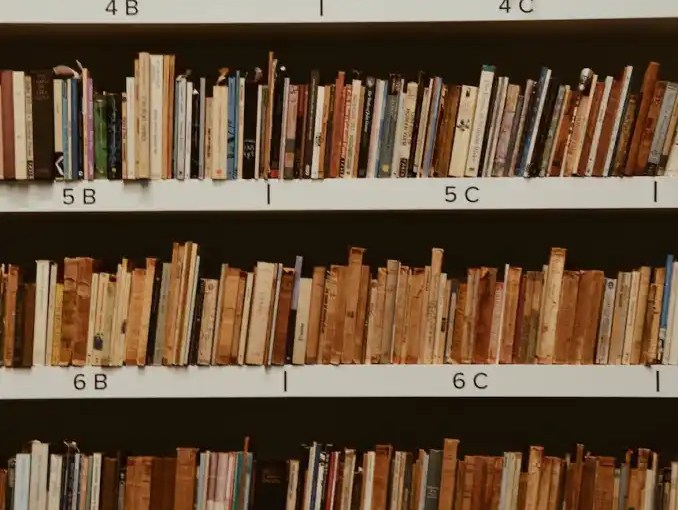
To-Be-Read Pile

So I have a nice pile of books to be read stacked up for the new year. I plan to be a lot more intentional about reading now that I am a year-and-a-half out of graduate school. I was so TIRED of reading. But now I plan to really get back into it and see where I go. I am going to list my books out and log when I read them on here as they are completed. The list (so far) contains:

–Defining New Yorker Humor, University Press of Mississippi, 2000

–Positioning Pooh: Edward Bear After 100 Years, University Press of Mississippi, 2021

–Best American Essays 2021, Mariner Press, 2021

–Best American Essays 2020, Mariner Press, 2020

–Best American Short Stories 2019, Mariner Press, 2019

–Best American Short Stories 2018, Mariner Press, 2018

–Always Happy Hour, Liveright Publishing, 2017

–Reconsidering Laura Ingalls Wilder: Little House and Beyond, University Press of Mississippi, 2019

–A Charlie Brown Religion: Exploring The Spiritual Life and Work of Charles Schulz, University Press of Mississippi, 2015

–A Year In Mississippi, University Press of Mississippi, 2017

–Born To Shine, Hachette Book Group, 2022

–What If? 2, Riverhead Books, 2022

–Little Pieces of Hope: Happy-Making Things in a Difficult World, Penguin Books, 2021

–The Potlikker Papers, Penguin, 2017

–American Housewife, Anchor Books, 2019

–Dispatches From The Golden Age, St Martin’s Press, 2022

–Bring Your Baggage and Don’t Pack Light, Anchor Books, 2021

There’s a list. There’s a plan. Off I go!

Doing a Little Research

I read an article recently talking about an illustrator who lost the ability to visualize what he was supposed to be drawing–for him, it happened after he went back to work from a three-week bout of COVID.

Going through the article, I learned a new word: aphantasia.

It means the inability to visualize images in your mind.

I found out that most people are able to “see” imagined images.

Now I have heard all my life about the “mind’s eye”–where you can recall how a person looks or imagine a scene in your mind to relax. I’ve read a lot of literature talking about visualization–imagining the outcome you want, and that imagining preparing you for various scenarios, such a public speaking, etc.

I never knew, however, that most people, when closing their eyes and being asked to visualize something, ACTUALLY SEE SOMETHING. This bit of knowledge was surprising because–

All I see are the backs of my eyelids.

I don’t see ANYTHING when I try to visualize. Nothing. Zip. Zilch. Nada.

Why am I talking about this? Well, it seems that most writers do a bang-up job imagining people, places, and things and are then able to narrate what they see in their mind’s eye, describing their characters, settings, and action.

I have always been told my writing is missing that kind of description. It was something I worked hard to try to do in my writing for graduate school for my MFA, something I tried to learn as a matter of craft.

But now I know it’s a case of my brain, again, being different from other writers’ brains.

I’ve been chewing this insight over for a while.

And right now, I am in a bit of despair about it.

Do I need to give up fiction? And on the hope of succeeding with my fiction? Are readers now so addicted to visual stimuli that if I can’t do this thing, I don’t have a writing future?

What should I do?

Starting Again From Scratch (Almost)

So this afternoon I typed the first paragraph of my new linked short-story collection with a working title of “Strong. Southern. Women.” (periods are intentional) The story is about a widow who was left to raise three young daughters on her own. Each of the twenty stories currently planned is about how the girls grow up, leave home, and (because each has an individual fatal flaw) fall from grace, destroying their lives–they think. One goes to white-collar prison. One descends into opioid addiction. And one winds up in a battered women’s shelter with her young son.

But their mother, who is both the one who held them together and who instilled the seeds of their self-destruction, gives them space, after they make the hard decision to reorder their lives, to grow, to gather up the pieces, and to get back on their feet. It’s going to be Southern Gothic again, but much more inspirational and happy-ending than Hurricane Baby.

I have an outline of all the stories and the backstory, and I’ve so far finally gotten started. We will see where this writing journey takes me. Wish me well!

So How Do You Do It?

How do you take on a long project and stick with it to completion? Good question.

One way to NOT do it is to talk about it too much. I try to reserve my initial enthusiasm for the project by keeping it under wraps. I actually started revising Hurricane Baby in January of this year but didn’t blog about it until much later. Why? Because I was afraid that I would lose enthusiasm for it if I talked it out too much, exposed too many of my ideas to scrutiny before they were fully formed.

Another way to keep the enthusiasm strong is to think about it in terms of craft and process instead of results. I used to find myself so carried away with the future of a project that I lost sight of the project itself. This phenomenon happened to me with this manuscript as well, which is why I abandoned it for a bit in April and May–I thought too much about where I wanted it to publish and who I wanted to pitch it to that I forgot I needed to spare my creativity for finishing it first.

Another way to keep the enthusiasm is to limit the project to something achievable. If you set out to write the Great American Novel, I guarantee that somewhere along the line you will freeze up because you will realize that the project is not living up to the hype you have put on it in your mind. I set out to write a series of short stories that were linked by Hurricane Katrina. I limited it to twelve stories. Only after finishing that initial plan of those twelve did I allow myself to think about how I could make it longer and bigger and more extensive.

As you get further into the story and the initial enthusiasm begins to wane, then it’s time to think about enlisting an accountability partner. For me, having a deadline is a blessing because it means I cannot take off too many days from writing or dawdle too long over any one particular story problem. And having someone eagerly waiting to read what you’ve written can be a boost to your productivity in that the audience is no longer just you–it’s someone else whom you are now accountable.

Just a few suggestions that have helped me sustain energy to stick with this project and finish it.

Fear Redux

I am trying to finish the last two stories in my manuscript this weekend and have been panicking every time I open the document. Thinking that I’m an idiot for believing I can finish a big fiction project like this again. Thinking that no one will ever bother to read it and care about the people I’m writing out or about the story I’m trying to tell.

I am just going to treat my self-imposed deadline as a hard one and pretend it’s going to be published do-or-die the day I finish it. We will see how well I can hoodwink myself into believing that. Fear is strong. Fear has bedeviled me my whole life. But I am going to be strong, and I am going to defeat the fear. No matter what.

Fear

So why was I afraid to pick this project back up and write on it when I got the idea for linked stories several months ago?

Number one was fear of failure. Would I start it only to find that it was unworkable? That it wouldn’t turn out as I envisioned? That fear is largely gone. I have ten stories completed in the conversion–several of which had been published in stand-alone form over the past few years. I need to have faith in my ability to craft something new out of what was already strong material.

Number two was fear of the blank page. This one is harder to fight. Where I have had to create almost an entire narrative from near-scratch, I have had a ton of problems. In fact, I have two stories left half-done after I pulled source material out of the main manuscript that have been a challenge to work on.

Number three is imposter syndrome. Many of us writers, when faced with a challenging task, can draw on past success at our craft as a reason to believe that we can face this new challenge, too. So why don’t we? Often it’s because we live in a culture that says simple success in completing a project is not enough; more must be done to make it “successful” by someone else’s standards.

Number four is fear of wasting time. This belief whispers to me that my paid work is more valuable than my fun work because it pays off financially. When I have paid work pending, it’s really hard to give time to unpaid work. This fear tells me that I am only a valuable writer when I’m earning money. I still work to overcome this obstacle.

Number five is fear of losing my mind. Many writers write from a place of trauma. I do so in my memoir work. Well, the first writing on this story came out of the trauma of Hurricane Katrina, which ultimately consumed me and resulted in a psychotic break. Many writers report re-experiencing their trauma when they write about it. I don’t want to go back to that some place I was when first crafting this story.

How am I working to overcome these fears? I remind myself that I am successful by my own lights and that is all that matters. I remind myself that computers come with a delete key to erase a poorly written sentence or paragraph or whole scene. I remind myself of Anne Lamott’s advice that no one cares as much as we do, and others do not live to tear apart our work.

Concrete steps I have taken have been to sign up for an extended flash fiction writing workshop where I can learn more about my craft and get used to the flow of writing fiction again in a low-stakes environment, one where my work is supported, and I am not writing only for my own satisfaction but for others who want to see me succeed. It basically comes down to getting my own confidence back.

I’ll keep you posted on how it goes.