
I’m traveling this weekend, but hope to be ready to talk more with all of you next week about the exciting times upcoming for my work! Happy writing and reading!
Tag: writing nonfiction
My Take on Generative AI
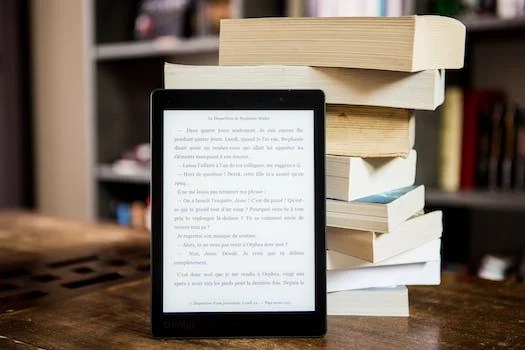
I documented on this blog back in February 2023 my experience with the earliest model of ChatGPT shortly after it had been released and nobody knew very much about it. I asked it to write blog posts in the voices of Anne Lamott and John Grisham, then tried to see if it could write like me. All responses were like reading corporate boilerplate–exactly how you’d expect a soulless machine to sound.
Then word came out that students were using to write papers–reports showed that kids all the way from middle school to PHD candidates were using it to write their papers. The schools tried to stamp it out as soon as they discovered it–but got pushback from parents saying that it didn’t matter that it wasn’t the students’ own work and that everyone else was doing it so why can’t my kid?
I counted myself lucky that I’d gotten out of teaching when I had because WHAT?
Then The Atlantic started digging into how exactly ChatGPT was created–and discovered that just about the entire internet’s caches of knowledge–websites, blogs, social media, online publications, Wikipedia–had been fed into the application’s programming. Even my blog, Not Quite Right: Living with Bipolar Disorder, had been scraped. My words, offered to encourage and help others who suffered from my illness, had been taken without my consent–or any renumeration.
Later The Atlantic came out with another bombshell–Meta, who owns Facebook and Instagram, had bought LibGen–a well-known pirated books site hosting around seven million books–and used all that literary excellence to train its own AI program. Authors new and old–such as William Faulkner, Mary Miller, Willie Morris, Lee Durkee, and Beth Kander, to name a very few–had their works pillaged for this. The article also noted that Meta had considered buying the books as required under copyright law but decided against it for profit reasons.
Listen to that again–Meta purchased a book site that was already breaking the law, used its assets to break the law again, and did so with a brazen disregard for the rights of the creators of those works.
And now Amazon refuses to promise to remove AI-generated books from its online bookstore. With AI’s expansion into images and animation, creatives from all sectors of the entertainment business are losing their jobs. And a book, widely regarded as having been created by a publisher using AI with no input from a human author, currently sits at #1 in the science fiction romance category.
Where does it end?
The miserable thing is that George Orwell predicted this in his dystopian novel 1984, published in 1949. The protagonist of the novel, Winston, had a girlfriend named Julia who worked in the literature department of the Ministry of Truth, running a tricky machine that created books for mass consumption without human input. Winston says this about the process: “Books were just a commodity that had to be produced, like jam or bootlaces.”
Is this future what we want literature to turn into? Because barring a miracle, that’s where we’re heading.

Liminal Space
So now I am in the liminal space between querying my book and publishing my book. I’ve done what I’m supposed to do (get the manuscript in the best shape I can, look over sample covers, get leads on publicity avenues) and now I’m waiting for the edits and the ironing out of final details before we go to print in February 2024. Suddenly February 2024 doesn’t seem that far into the future as it did in September when I signed the deal.
I am working on When I Went Crazy–I’ve finished the first chapter and am looking at the next. I will likely start on it tomorrow night when I write. I’m also researching places to try to publish my novella Looking For Home as a standalone book. So far I think I’ve sent it six places (I don’t have my list in front of me so don’t. hold me to that.) Not many publishers do novellas, so there aren’t many places to send to. But I’m going to give the ones I can find a shot and see what happens.
I love that I’m finally able to think about a future in writing and publishing my work. I had resolved to myself that if Hurricane Baby didn’t publish by 2025 (the twentieth anniversary of Hurricane Katrina) that I would just give up on writing fiction altogether and just stick to my bipolar work and labor for a better world for the mentally ill in my little corner of advocacy and education. But now I feel like I have a chance to do more, be more, get more visibility for the issues surrounding mental illness. And that’s a good feeling.

Mood Music for Writing
When I was first writing Hurricane Baby in those days right after Hurricane Katrina, I listened to two CD’s obsessively. We were members of the BMG Music Club back then, and we had ordered INXS Greatest Hits and Duran Duran Greatest Hits in the weeks before the hurricane hit, and they were delivered to our mailbox once mail service was finally restored to our area, in the first batch of mail we got.
So those songs became part of the backdrop of those days following the disaster and were very closely associated in my mind with my emotional state after the hurricane–terrified of what we had become as a society, traumatized by the endless news feeds showing the horror wreaked on the entire state of Mississippi and the eastern half of Louisiana, and desperate for a return to sanity and normalcy in my spirit. And whenever I worked on the novel that my story was becoming–I put those CD’s on the stereo.
So whenever I returned to the manuscript to retool it, revise it, revisit it, I put those CD’s on to try to recreate the vibe of my emotional state when I first conceived and wrote the book. That included this latest set of revisions, the ones that finally got the book sold.
So now I am thinking about my new project, which I am currently calling When I Went Crazy. I decided that since playing mood music in the background worked so well for writing Hurricane Baby, I’d try it with this one as well!
I tried to remember the music I’d played while writing the thesis for my graduate program and just couldn’t come up with anything I had stuck with that inspired me to write. Then I realized that with me concentrating on the time period I was going to cut my thesis down to, it was going to be a lot darker than the thesis. The theme of my thesis had been hope, that there is life after receiving such a diagnosis. But I realized that to accurately convey my emotions during the time the book would cover, I was going to wander into some scary territory.
So I set about putting together a playlist on Spotify that would reflect the vibe I wanted to create in the new project. I started with my favorite songs from the two CD’s I had used to write Hurricane Baby–then I let the suggested songs I was given after each addition govern the other choices. I have songs from Robert Palmer, Simple Minds, Prince, and several other 80’s groups, because I will be doing some flashbacking to when I was a teenager and listening to those songs. Other songs from when I was even younger include some of Elvis Presley at his bluesiest best. Anything the suggestions list had on it with a harder edge to them that would capture that feeling of helplessness I had watching myself fall completely apart went on the list.
When I finished, I had two-and-a-half hours of music listed out. I never write for longer than that at a time nowadays with my job, so I felt like that was a perfect length. I labeled it “Writing Mix–When I Went Crazy” and stored it on my phone. I was pleased with myself. I will reserve it for when I am actively writing on anything related to the memoir. Off to the races!
Edit; Selling Hurricane Baby? That playlist was Hamilton the Original Cast Album. “I am not throwing away my shot!” But I’ll save that story for the book tour. . . 🙂

My Final Copy
I turned in my final copy of the manuscript on November 1, early last week. Now it’s time for the editors to get going on it and find what I might have missed. I really worked hard to do all the corrections and typos and continuity errors, and I thought of one this afternoon I probably left uncorrected–in one particuIar spot, I called Tommy Hebert’s truck a diesel truck–and it’s not. So I need to at least correct that as soon as possible once I get the edited manuscript back. I’m hoping that’s the only glaring thing that’s there. I imagine there may be stylistic discussions, etc. as well. Which I do not mind getting into. If something needs changing to make more sense, etc., by all means, fix it.
I don’t know when those are going to come across–I figure after the new year with the way people usually work during the holidays. It needs to go to print February 1 or thereabouts. I just want the editing process to be smooth and not rushed. So I hope I hear back sometime in December while I am off for the holidays. We will see.
I am starting to turn my mind to my next project, and I think it may be my memoir project rather than any more work on Missing and Mentally Ill in Mississippi. I haven’t gotten any replies on it from the batches I sent out in August and September, and I was too sick to send many queries during October. And most of New York publishing shuts down during the holidays until the second week of January. I have the proposal, and it is still solid.
But I think I am going to invest in rewriting the story of those 24 months between when I told Bob I was pregnant with my youngest daughter and when I was actually diagnosed bipolar. And I can have my stats (if any!) from sales of Hurricane Baby to bolster my case for getting another publishing deal. Not sure exactly when I will get started, but maybe soon, maybe after the new year, maybe after i finish edits for Hurricane Baby. I’m going to start by reading that part of my thesis manuscript again and see what (if anything) I can incorporate from that manuscript to the new one.
Wish me well! Happy writing to you all!

Self-Publishing vs. Traditional Publishing
So if you’ve been on social media for the past couple of days, you’ve probably seen the kerfuffle on this topic. A Famous Author spoke disparagingly recently about those who self-publish rather than get an agent and a Big Five deal. She called self-publishing the “easy way”.
Now, I understand this line of thought. Back in the 2000s, self-publishing was synonymous with vanity presses, those you paid to simply print your book for you (often at great expense) and left you to your own devices to sell a few copies and be able to say you wrote a book. Often, they were riddled with grammatical errors and looked very unprofessional to the savvy readers’ eye.
However, that’s no longer the case with the current generation of writers. Many act as their own publisher, hiring editors, book designers, publicists, printers, and other professionals to aid them–or taking the initiative to do all of these jobs themselves and–most importantly–keep all their profits from sales.
I knew I didn’t have the expertise or desire to incorporate and run my own publishing business. So I opted to pursue a small press or university press deal, where I wouldn’t be too busy doing all the technical work to publish a book to be able to write the next one.
Self-publishing is also democratizing and diversifying the publishing trade. The Big Five have a problem common to multinational corporations–appealing to the lowest common denominator to make a quick buck or billion. But very little of that money goes to the author–most is eaten in taxes, agent commissions, and other expenses of the publisher.
I was blessed to find a regional press that published what I was selling–a book of Southern literature, a short story collection, a book set in recent past. They take care of the technical details, and I set my own publicity schedule, going where my book is likely to find an audience. As far as I am concerned, it’s a win-win.
Writing a book is a big accomplishment. Finding an agent and a publisher is darn near impossible for someone just starting out. The main thing for an author to watch out for is someone who wants to draw you into spending a lot of money and have very little to show for it afterwards–agents who charge upfront fees, publishers who hoodwink you into a ironclad contract then take you to the cleaners for expenses, editors who want to turn your book into something other than what you meant to write.
But making the choice to self-publish, with your eyes open to the demands that path entails, is often a case of getting a book out into the world that is everything you wanted it to be. And that’s not as “easy” as some might think.
Break
I took a break from writing because I had outpatient surgery and didn’t want to write doped up. I’m going to start back on Missing and Mentally Ill in Mississippi tomorrow and have several goals for August:
–to complete chapter two
–to send out more query packages
–and to keep reading over and refining the chapters I’ve got
I keep on writing in the dark–I feel like I am going to write a book-length newspaper article. But I know it needs to be more than that. It needs to be a story–something to capture people’s hearts instead of just their minds. I feel like I can do this while keeping my head down and just plowing through, one short assignment at a time.
I am trying to push my own boundaries as a writer and get into people’s heads with the story itself, not with my fancy writing. I don’t think my nonfiction voice is fancy. I still have a very ‘just-the-facts-ma’am” voice. I need to push to come across as knowledgeable because I am. I need to push to create scenes as well as facts. Hopefully this book can teach me how to do that.
Onward!

Writing Retreat
Last weekend I went to a writing retreat sponsored by Mississippi Christian Living, a magazine I used to write for way back in the 2000s. It was a lot of fun!
I got to meet Susan Cushman, an author whose career I’ve been keeping up with for a long time–she was the keynote speaker. She published a book with University Press of MS about writing, which I have read, and I won one of her books today as a door prize so that was fun.
During lunch I had some time to talk to her and we turned out to know a lot of the same people, of course. We talked about what we were each working on and that was fun to hear about.
I got to talk to another one of the authors as well just as we were leaving but not for as long as Susan.
We did writing exercises, and some people were not really serious about writing. They wanted to talk about writing, but when it came time to write, they didn’t do it. Weird.
I’ve noticed there are a lot of people like this–they love to read, they love to talk about books, but then they start talking about how they would like to write a book and ask another writer for tips and pointers. Sometimes they even go to college and study creative writing and even get an MFA. But they just like to talk about their plans to write and what keeps them from writing–kids, a job, grandkids, other hobbies, husbands, etc.
I spent six of the most miserable years of my life working a job I hated and not writing after I finished grad school the first time. I didn’t want that to happen again this time. I have worked hard to integrate writing into my life again and even at the bleakest points, kept writing. Blogging was a big part of that. But working to focus, sit down, and write the thing is the best decision a writer can make. Success breeds success. And as Neil Gamian says, finished projects turn into published projects.
So to all those out there who keep talking about writing but don’t do it, i leave you with Toni Cade Bambara’s observation that writing is going to cost you something–that anything worth doing is going to have a cost. And there’s the advice from Gabino Iglesias: “Many people have a book in them, but it takes a special kind of freak to leave the Land of Laziness, cross the Plains of Procrastination and Insecurity Mountain, find the Blade of No One Made You Do This, and use it to cut your chest open and yank that book out.”

Moving Right Along
I drafted a first chapter of Missing and Mentally Ill in Mississippi in my writing sprints this week, about 9,000 words. It needs maybe a few stats to fill it out, but I finally worked out the arrangement of the scenes and what order I wanted everything in. I had to figure out what I wanted to accomplish, which was introducing major characters and drawing parallels between us, then summing up what I wanted to do in the book. So I feel good about it.
Now I need another sample chapter and an introduction to my proposal. Then I’ll continue to draft more sections and see if I can get an agent on proposal only. I am selling it as true crime, so we will see how that stacks up with what agents are looking for.
My writing friend is really keeping me accountable. She reminds me it’s a writing day and that we start at 6:30 p.m. and write for an hour. Other times I remind her. But we check in at the beginning, then give a word count and what part of the story we wrote after we’re done. So it’s nice to know someone wants to hear about your writing when you finish.
Onward and upward!

Progress!
So far I have typed 3000 words on my current work-in-progress. I’ve done the writing sprints with my MFA buddy Shannon and am making progress past my initial fear about taking such a project on. When I start I just think, “It’s only for an hour.” And I just write!
The more I write the more excited I get and the more daunting it gets, but I’m not letting myself think it’s a book; I’m treating each chapter like a newspaper article. That’s helping, too.
I can’t wait to get back to it Monday night!
 Julie Liddell Whitehead